Quick answer: On price tag alone, lead-acid (gel, AGM, tubular) is cheapest. But measured by what you actually pay for every unit of electricity the battery delivers over its life, a wall-mounted lithium pack works out about 10 times cheaper than gel or AGM, and about 4 times cheaper than tubular. Tubular batteries are the best-value lead-acid option if you don't mind topping up water.
Every week someone asks us the same question: "Why should I pay KSh 148,000 for a lithium battery when a gel battery is KSh 42,000?" It's a fair question. The honest answer is that the sticker price tells you almost nothing. What matters is how much usable energy a battery gives you before it wears out, and that's where the big differences hide.
The two numbers that decide what a battery really costs
Every battery spec sheet has two numbers most buyers skip:
- Depth of discharge (DoD): how much of the battery you can safely use each night. Lead-acid batteries should only be drained to about 50%, or they age fast. Lithium (LiFePO4) batteries are comfortable at about 80%.
- Cycle life: how many charge-and-discharge cycles the battery is rated for before its capacity fades. If you use your backup every night, one cycle equals one day.
Multiply the usable energy per cycle by the number of cycles and you get the total energy the battery will deliver in its lifetime. Divide the price by that, and you get the true cost per kWh.
We did the maths with real prices
These figures use the prices and manufacturer ratings listed on our own product pages at the time of writing:
| Battery | Price (KSh) | Usable per cycle | Rated cycles | Lifetime energy | Cost per kWh |
|---|---|---|---|---|---|
| 200Ah AGM (12V) | 39,500 | 1.2 kWh (50%) | ~500 | ~600 kWh | ~KSh 66 |
| 200Ah Gel (12V) | 42,000 | 1.2 kWh (50%) | ~600 | ~720 kWh | ~KSh 58 |
| 300Ah Tubular (12V) | 48,000 | 1.8 kWh (50%) | ~1,200 | ~2,160 kWh | ~KSh 22 |
| 200Ah Lithium (12V) | 210,000 | 2.0 kWh (80%) | 3,000+ | ~6,100 kWh | ~KSh 34 |
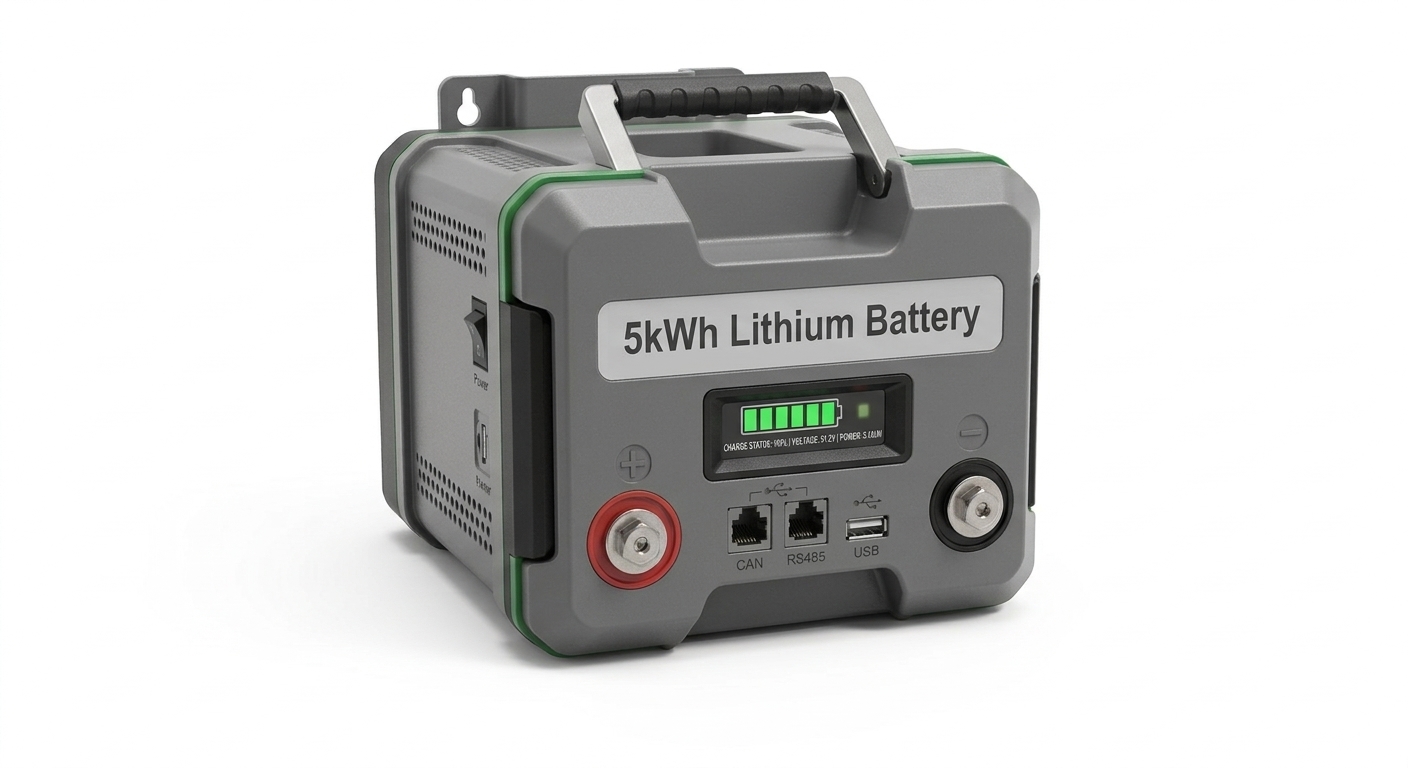
| 5kWh Lithium pack (48V) | 148,000 | 4.0 kWh (80%) | 6,000+ | ~24,000 kWh | ~KSh 6 |
| 10kWh Lithium pack (48V) | 285,000 | 8.0 kWh (80%) | 6,000+ | ~48,000 kWh | ~KSh 6 |
Be realistic: cycle ratings are the manufacturer's figures under good conditions. Heat, deep discharges and poor charging all shorten real life, and no battery lasts forever just because the cycle count is high. Treat these numbers as a fair comparison between battery types, not a guarantee.
The surprise: lead-acid can cost more on day one, too
Say you want about 4 kWh of usable backup every night: enough for lights, TV, Wi-Fi, a fridge and laptops in a typical home. With lead-acid you can only use half of each battery, so you need roughly double the capacity:
- Gel: about four 200Ah batteries, around KSh 168,000, rated for roughly 600 nights.
- Lithium: one 5kWh pack at KSh 148,000, rated for 6,000+ cycles.
So for a full night's backup, the lithium pack can actually be cheaper upfront and still outlast the gel bank many times over. This is why lithium has taken over the solar market so quickly.
So which battery should you buy?
Choose gel or AGM if…
- You need a small, cheap backup for a few hours of lights and TV, and the budget is tight right now.
- You're replacing one battery in an existing 12V system like-for-like.
- The battery will sit mostly idle as an occasional backup, so cycle life matters less.
Choose tubular if…
- You want the lowest cost per kWh in lead-acid and you cycle the battery daily.
- You're happy to top up distilled water every few months and keep the battery upright in a ventilated spot.
Choose lithium if…
- You use your backup every day: solar homes, shops, offices and clinics.
- You want something maintenance-free, compact and wall-mounted, roughly a third of the weight of lead-acid.
- You're planning to stay with the system for years. The longer you keep it, the bigger lithium's advantage.
Three mistakes that kill batteries early
- Draining lead-acid too deep. Regularly pulling a gel battery below 50% can cut its life dramatically. Size the bank so normal use stays above that line.
- Mixing old and new batteries. In a bank, the weakest battery drags the others down. Replace the whole set together.
- Wrong charger settings. Lithium and lead-acid need different charging voltages. Make sure your inverter or charge controller is set for your battery type. If you're not sure how, read our inverter guide or ask us.
Already have a battery that's struggling? Here are 5 signs it's time to upgrade.
Frequently Asked Questions
Is a lithium battery worth it in Kenya?
For daily use, usually yes. Measured by cost per kWh delivered over its life, a lithium pack is several times cheaper than gel or AGM, and it is maintenance-free. For a small, occasional backup on a tight budget, gel or AGM can still make sense.
How long does a gel battery last?
A gel battery rated for around 600 cycles at 50% depth of discharge lasts roughly one and a half to two years if it is cycled every night, and longer if it is only used during occasional power cuts. Heat and deep discharges shorten that.
What is the difference between tubular and gel batteries?
Tubular batteries are flooded lead-acid batteries built for heavy daily cycling at a low cost per kWh, but they need periodic distilled-water top-ups and must stay upright. Gel batteries are sealed and maintenance-free, but have a shorter cycle life.
Can I use lithium batteries with my existing inverter?
Often yes, as long as the inverter supports lithium charging settings and matches the battery voltage (12V, 24V or 48V). Wall-mounted packs work best with hybrid inverters that can communicate with the battery. Check with our team before you buy.