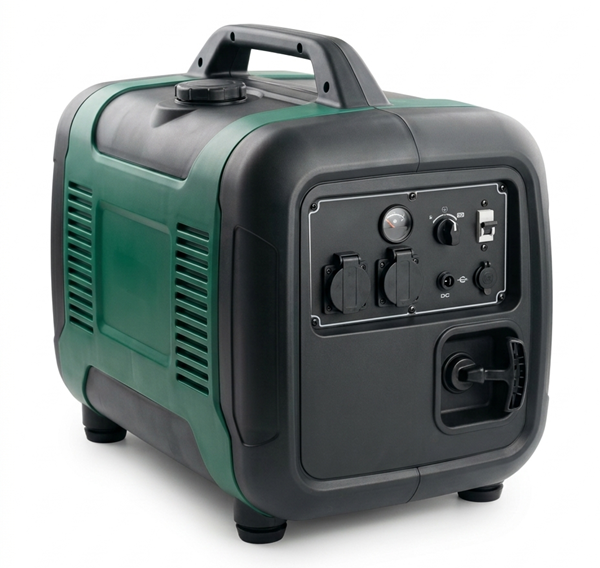
Not the same thing as a conventional generatorAn inverter generator does something a standard generator doesn't. A conventional machine ties its engine…
An inverter generator does something a standard generator doesn't. A conventional machine ties its engine speed directly to the electricity it produces, so the output rises and falls as the engine works harder or lighter. That fluctuating supply is fine for a floodlight or a welding machine, but it is not clean power, and running sensitive equipment on it shortens its life.
This generator produces AC power, converts it to DC, then rebuilds it electronically into a pure sine wave that is as stable as mains supply, or better. That's what makes it safe for laptops, televisions, decoders, routers, fridges with electronic controls, medical equipment and anything else with a circuit board inside it. If you have ever hesitated to plug a computer into a generator, this is the class of machine that removes the question.
The enclosed casing and variable engine speed together bring the noise level down to roughly 58 dB at seven metres, which is around the volume of ordinary conversation. A conventional open-frame generator of the same output will typically sit closer to 90 dB, loud enough to make a phone call difficult in the same compound.
This matters more in Kenya than the specification sheet suggests. Plots are close together in most urban and peri-urban areas, and a generator that runs through a blackout every evening becomes a running dispute with neighbours. It also matters for guest houses, clinics, offices and salons, where a roaring generator directly affects whether customers stay.
Because the engine speed varies with demand rather than running flat out at all times, the machine only burns what the load requires. Under a light load in economy mode it idles down; when you switch on something heavy it responds. On a typical mixed household load, this can cut consumption by around 30 to 40% compared with a conventional generator running at a fixed speed.
With a 7-litre tank, expect somewhere between 7 and 10 hours at partial load and around 4 to 5 hours at full output. At Kenyan pump prices, the fuel saved over a year of regular outages is a meaningful share of what the machine cost in the first place.
| Rated output | 3kVA (2.4kW continuous) |
| Maximum output | 3.2kVA peak |
| Output type | Pure sine wave inverter |
| Voltage / frequency | 240V, 50Hz single phase |
| Engine | 4-stroke, single cylinder, air-cooled petrol |
| Displacement | ~145cc |
| Starting | Recoil pull start |
| Fuel tank | 7 litres |
| Runtime | 7–10 hrs at 50% load |
| Noise level | ~58 dB at 7m |
| Outlets | 2 × 240V sockets, 1 × 12V DC |
| Dimensions | ~580 × 350 × 520mm |
| Weight | ~32kg |
| Certification | CE certified |
| Warranty | 1 year |
The usable continuous figure is around 2.4kW, and you should size against that rather than the 3kVA headline. A realistic simultaneous load looks like:
That combination sits comfortably inside the machine's capacity. What will not work is high-heat equipment: instant showers, electric kettles, cookers, ovens and irons each draw 1.5 to 3kW on their own and will trip the breaker or leave you nothing for anything else.
Watch startup surge as well. Fridges, pumps and air conditioners draw two to three times their running wattage for a second or two when the motor kicks in. A 750W pump can momentarily pull over 2kW. That headroom is exactly what the peak rating exists for, but it means you should not have the generator loaded to capacity when a motor is due to start.
Use fresh, clean petrol. Fuel that has sat in a jerrycan for months is one of the most common causes of hard starting and carburettor problems on small generators in Kenya. Check the oil before every use and change it at the intervals in the manual, since these engines are air-cooled and unforgiving about low oil.
Run it outdoors, always, and never in a garage, veranda, store or any enclosed space, even with a door open. Carbon monoxide from a petrol engine is odourless and kills people every year in exactly these circumstances. Site it on level ground with clear air around it, downwind of open windows, and keep it under cover from rain but never inside the house.
If it will sit unused for weeks between outages, either drain the fuel or run it dry, and start it briefly once a month. A generator that has never been serviced is the one that fails on the night you need it.
In stock in Nairobi with delivery countrywide and a 1-year warranty. We also stock service parts, oil and automatic transfer switches if you want the generator to pick up the load without anyone going outside to start it.
If you are weighing a generator against a solar and battery system, or considering both, talk to us first. For households facing occasional outages a generator is often the cheaper answer, while for daily or extended outages the fuel cost adds up quickly and a battery system may work out better. Message us on WhatsApp with your situation and we'll give you a straight comparison rather than just selling you what's in front of you.
| Rated Output | 2.6kVA / 2.6kW |
| Max Output | 3kVA / 3kW |
| Fuel Type | Petrol |
| Engine | Air-cooled, single cylinder, 4-stroke |
| Fuel Tank Capacity | 12L |
| Runtime (75% load) | ~7 hours |
| Noise Level | ~60dB at 7m |
| Start Type | Recoil (pull-start) |
| Frame | Silent inverter enclosure |
| Power Factor | 0.8 |
| AC Outlets | 2 x 13A sockets, 1 x USB |
| Oil Capacity | 0.6L |
| Dimensions | 520 x 290 x 450mm |
| Weight | 32kg |
| Certification | CE certified |
| Warranty | 1 year |
| Category | Generators |
| Rating | |
| Availability | In Stock (10 available) |
No reviews yet. Bought this product? Be the first to share your experience.
Bought this product from Nepron? Log in or create an account with the email you used when ordering, and you can leave a review.